Who Lives Close Enough to Drive Over? A Small-Budget Social Ad Plan for Farm Stands
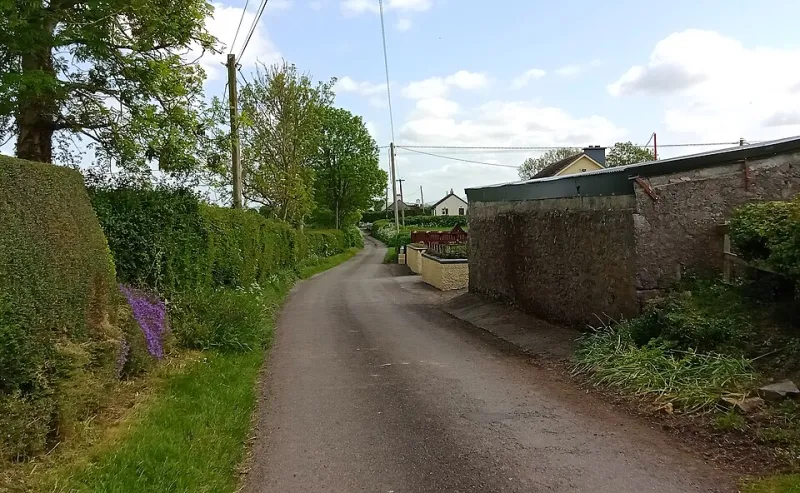
Photo: A.-K. D., CC0, via Wikimedia Commons
Most farm stand marketing advice assumes you want reach. You do not. You want the people who are eight minutes away, know the shortcut past the elementary school, and can swing by after soccer practice. That is a different job.
A small-budget radius ad is less about fancy technology and more about refusing to pay for impressions from people who will never make the drive. In 2026, the ad tools are good enough to put a simple offer in front of nearby households without a marketing degree. The hard part is keeping the whole thing small, local, and measurable.
Start with a radius, not a Hollywood geofence
A true geofence draws a digital boundary around a competitor's parking lot or a downtown block. Some platforms call it geofencing, some call it radius targeting, and most farmers do not need the complicated version. For a farm stand or U-pick weekend, a simple radius around your address or a handful of nearby ZIP codes is usually enough.
In a dense suburb, five miles can cover a lot of households. In a rural county, ten or fifteen miles may be the real local market. The right number is not the smallest possible ring. It is the ring that captures people who will actually drive to you. A good starting test is seven miles, then widen to twelve if the first weekend feels too quiet.
One warning: do not accidentally target the whole metro because the platform's default is broad. Check the map preview before you publish. If the shaded area includes a city where nobody knows your farm's name, tighten it.
Pick one weekend and one job
An ad that says 'come visit sometime' is a bumper sticker. An ad that says 'U-pick strawberries Saturday from 9 to 2, bring a cooler' is a plan. Pick one weekend and one measurable job: thirty extra U-pick visits, twenty preorders for the holiday market, or a full Saturday at the farm stand.
Run the ad from Wednesday through Saturday morning. That gives nearby households a couple of days to see it and still catches the Friday-night planners. Set a hard budget cap of $10 to $20 per day, with a total weekend ceiling of $40 to $80. Two weekends at that level is a fair test. If the ad cannot pay for itself at that scale, more money will not automatically fix the offer.
Avoid the urge to boost every post. One focused ad set per weekend is easier to read and easier to judge.
Make the creative sound like a neighbor wrote it
The best-performing local ad is not the prettiest one. It is the one that proves you know where the customer lives. Name a road, a landmark, or a town. Mention the pickup window. Show the actual field, the sign at the end of the driveway, or a crate of what is ready right now.
A simple structure works:
- Local hook: 'If you are off Route 9 near the old grist mill, we are twelve minutes from your kitchen.'
- What is ready: 'Strawberries are coming in heavy this week, and the sugar snap peas are finally here.'
- When to come: 'Saturday, 9 to 2. U-pick closes at 1:30 so we can reset the rows.'
- One action: 'Tap for hours, directions, and what is sold out.'
Use a photo from your phone. A slightly crooked shot of the farm stand sign with the field behind it will often beat a polished stock image because it looks like a real place. Keep the text short enough that someone waiting at a red light can get the point.
Build one destination, not five
Every ad needs one place to send people. That should be a single page on your website, not your homepage and not three different social profiles. The page needs the address, hours, what is available, a map link, and one sentence about parking or pickup. Update it before the ad goes live. If the page says 'check back soon' while the ad promises berries, you have wasted the click.
If you do not have a website page to spare, use a code word instead. Ask customers to say 'neighbor' at the register or mention the ad when they check in for U-pick. Train staff to tally those mentions on a clipboard or a notes app. It is low-tech, but it gives you a real count instead of a guess.
For a slightly cleaner read, use both: a single landing page for clicks and a code word for walk-ins. The landing page tells you how many people were interested. The code word tells you how many actually showed up.
Do the math before you fall in love with clicks
Platform dashboards love clicks. Your bank account cares about sales. Say you spend $80 on a weekend ad. You get 40 clicks and 12 code-word redemptions. If the average ticket is $28, that is $336 in sales before the ad cost, or about $256 net. Not bad for a small farm stand.
But be conservative. Maybe only eight of those people would not have come anyway. At a $25 average ticket, that is $200 in new sales against $80 in ad spend. Still workable. If you are spending $80 and seeing three redemptions, the creative, the radius, or the offer needs work.
Do not count every sale as an ad sale. Ask the code-word question. Check the landing page visits. Compare the weekend to a normal weekend with similar weather. You are looking for a signal, not a perfect accounting system.
Run a two-week test, then adjust one thing
Week one: seven-mile radius, one photo, one code word. Week two: keep the same budget but change one variable. Maybe widen to twelve miles, or swap the photo for a short video of the rows, or change the pickup window from all day to a two-hour block.
If clicks are high but walk-ins are low, check the page and the hours. If impressions are high but clicks are low, the creative is probably too generic. If people show up but nobody mentions the code word, the staff reminder is the weak link. Fix the smallest thing first.
A few traps worth avoiding
Do not run the ad year-round just because it is on. Use it for a specific weekend, a crop peak, or a holiday preorder push. Do not promise 'plenty in stock' unless you are sure. Do not make the radius so tight that you exclude the next town over, especially in rural areas where the drive is normal. And do not forget to post organically on the same day. The ad is the paid reminder; your regular followers still need to see the update.
The five-mile ad is not supposed to go viral. It is supposed to act like a digital sign at the end of your road. If a household five miles away sees it on Thursday and pulls into the farm stand on Saturday, the ad did its job.