Before They Turn In: A Directions Tune-Up for Farm Pickup and U-Pick Days
Most farm customers do not get lost because they are careless. They get lost because the last quarter mile of your address lives in a paragraph they never read. In town, a street number and a map pin usually get the job done. Out here, the mailbox can sit half a mile from the house, the county road might have three names depending on which map you open, and the turn into the field is invisible from the pavement until you are already past it.
That is not just a customer-service annoyance. It is a quiet tax on pickup days and U-Pick weekends. Every wrong turn becomes a phone call, a text, a late arrival, or a no-show. The good news is that most of this is fixable in one Saturday morning with your phone, a cup of coffee, and a little honesty about how your farm actually looks from the road.
Start with the pin, not the prose
Open Google Maps and search your farm by name and address. Then open Apple Maps and do the same. You are checking one thing first: where does the pin land?
If the pin drops at your mailbox, your house, or the center of a field, customers will follow it there. That is exactly how people end up calling from a ditch saying their GPS told them to turn. Claim or verify your Google Business Profile if you have not already, and use Apple Business Connect to manage the Apple Maps listing. Then move the pin to the place you actually want a first-time customer to arrive: the farm stand door, the pickup barn, or the parking area beside the gate.
While you are in there, make sure the address field matches the official postal address. Do not try to be clever in the address line. Save the clever part for the directions field.
Write directions like a local, not a database
A database wants a street number. A customer wants to know which gravel drive is yours. Those are different jobs.
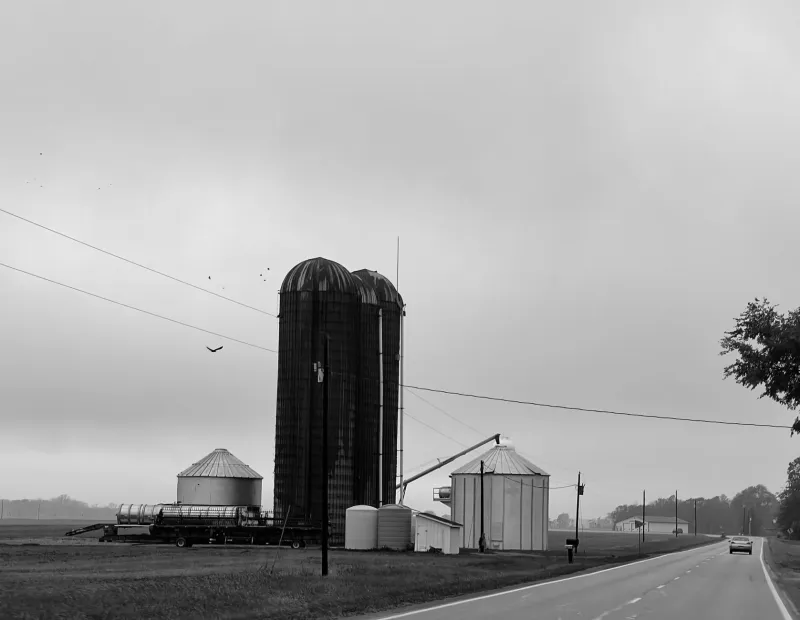
Write directions the way you would say them to a neighbor. Start from a road people actually know, then use landmarks that are visible from the driver's seat. Something like: from the highway, turn at the blinking light, go two miles, pass the blue silo, and take the second gravel drive after the cluster of mailboxes. Look for the open gate and the white sign. If you reach the old white barn, you have gone too far.
Include the details that matter in rural areas: pavement turns to gravel, the bridge is narrow, the driveway is easy to miss in the dark, or the lower field gets soft after rain. If there is a second entrance that maps sometimes chooses, say plainly which one customers should use and which one they should ignore.
Put those directions in more than one place. Add them to the contact page of your website, the directions section of your Google profile, the order confirmation for pickup, and the reminder text or email you send the day before. A customer should not have to hunt for the good version.
Take four photos that do the work
Photos are not decoration here. They are navigation.
Take four phone photos in daylight: the turn from the road, the gate or entrance, the parking area, and the place where customers should walk next. Do not stage a magazine shoot. Shoot what a driver actually sees. If your sign is small, show where it sits relative to the driveway. If the parking area is grassy, show that. If the turnaround is tight, show it so someone in a pickup truck knows what to expect.
Add those photos to your website and your Google Business Profile. Caption them plainly: the gravel drive just past the blue silo, customer parking beside the packing shed, the walk-up window at the farm stand. A first-time customer who sees the gate before they leave home arrives calmer.
Test the route yourself
Before the next busy weekend, drive to your farm from the main highway using only the public directions you have posted. Pretend you have never been there. Notice where you hesitate. Notice what is hard to see at dusk or in rain. Notice whether the pin sends you to the right entrance.
If you can, ask a regular customer or a friend who does not know the farm to do the same and tell you where they almost went wrong. That feedback is worth more than a hundred assumptions.
Small fixes, fewer texts
This is not a big digital project. It is a pin correction, a short paragraph, four photos, and a test drive. Do it once, then check it again before major pickup weekends and U-Pick season.
The payoff is simple: fewer where-do-I-turn calls, fewer late arrivals, and fewer customers who start the visit frustrated. Your address is not really a paragraph. It is a pin, a landmark, and a gate people can recognize. Make those three things agree, and the weekend crowd gets to your farm instead of your voicemail.