Saturday Morning Search: How Market Vendors Show Up When Shoppers Reach for Their Phones
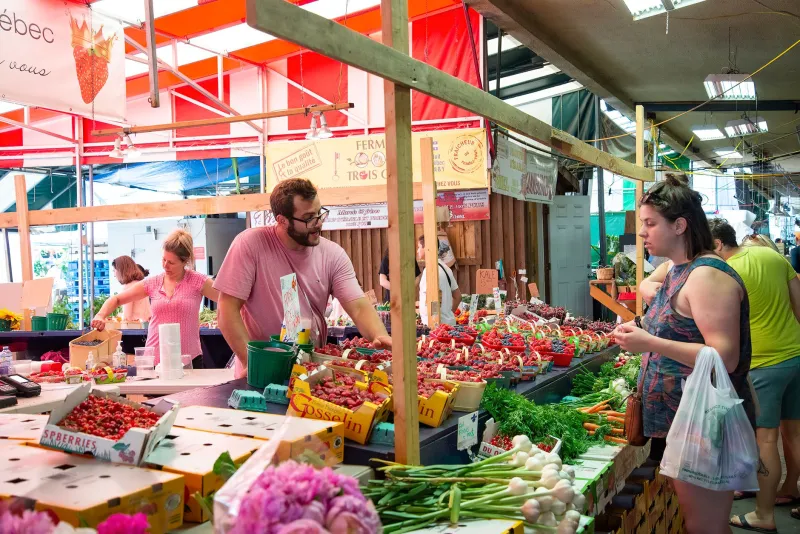
Most people who buy a dozen ears of corn from you on Saturday didn't stumble onto the market by accident. They opened their phone in the driveway, typed "farmers market near me," and picked whichever option looked open, close, and easy to navigate with a minivan full of kids. If your name and your tent don't appear in that little scroll of results, the rest of your setup work is happening for a smaller crowd than it should.
The good news: this is one of the few parts of marketing where an hour of admin work in February pays off every weekend from May to October. Here's the practical version.
Start with the listings you don't own
Before you touch anything of your own, check what the internet already says about you. Two places matter most:
The market's own listing. Most established markets have a Google Business Profile, a website with a vendor page, and a Facebook page. Pull up all three and look for your name. Is it spelled right? Is it last season's version of your farm? Do the links go somewhere that actually works? Market managers are usually thrilled to get a correction instead of a complaint — send one short, friendly email with the exact wording you want used and a fresh photo attached.
The market's vendor directory. If the market publishes a vendor list, that page is often the single highest-ranking result for "[your town] farmers market." A working link from it to your farm's website is worth more than most paid ads you could buy, and it's free. Ask for it.
Use your own profile like a calendar, not a billboard
Your farm's Google Business Profile should answer one question clearly: where can someone find your product this week?
- Keep your hours current. If your farm stand is closed on market days because you're at the market, say so, and put the market in the description.
- Add a "Find Us" page on your site that lists every market, the day, the address, and the hours — in plain text, not buried in an image. Search engines can't read a photo of a flyer.
- If you sell at four markets, that page has four short sections. One page, four paragraphs, done.
- Update it once at the start of the season and once if anything moves. That's it.
If you're on an iPhone, take ten minutes for Apple Business Connect as well. It's a smaller audience, but it's the map app that opens by default for a lot of shoppers, and an empty or out-of-date listing there is a quiet leak.
The map pin question
Here's where well-meaning vendors get in trouble: creating a brand-new Google listing pinned to the park, the fairgrounds, or the church parking lot where the market sets up.
Don't. You don't own that location, and Google's guidelines are blunt about it. Listings for places you don't control tend to get suspended — sometimes taking the legitimate parts of your profile with them — and duplicates confuse shoppers who end up at an empty lot on a Tuesday.
The market's pin already exists and already ranks. Your job is to attach yourself to it, not compete with it. That means: get named on the market's listing when you can, get linked from the market's vendor page, tag the market's account in your posts, and make sure your own website mentions the market by name and address.
Photos do the selling while you're still setting up
Before 7 a.m., nobody can see your tent. Photos close that gap.
Take three shots every market morning, before the rush:
- The wide shot from the walkway — tent, banner, and a recognizable landmark behind it.
- The table shot — the thing you're proudest of that day, close enough to read the sign.
- The crowd shot — people shopping, faces turned away or blurred, mid-morning when it looks alive.
Upload the wide shot to your Google profile and the other two to your social accounts. Rename the file something a human would search before you upload it ("honeycrisp-apples-farmers-market-booth.jpg" rather than "IMG_4471.jpg"). It takes about ninety seconds and it keeps your profile from looking abandoned by July.
The one post that actually moves feet
Here's the Saturday-morning routine that does the most work for the least effort. At 7 a.m., before you unlock the trailer, post this on whichever platform your customers actually use:
At [Market Name] until [time] today. Stall [number or landmark] — look for the [color] tent next to the [recognizable thing]. We've got [three items, specific]. Sold out of [item] last week by 9:30, so come early if that's your thing. Card and cash both work.
Four sentences. It answers where, when, what, and how to pay. The landmark is the part most vendors skip and the part shoppers need most — "near the north entrance" beats any amount of enthusiasm.
Tag the market's account so it can share you. Repost it to your Stories with a photo. Then put the phone down and sell.
A short Saturday checklist
- Market vendor page: name spelled right, link working
- Google profile: hours correct, one new photo
- Facebook and Instagram: 7 a.m. post with landmark and hours
- Story reshare with the wide tent shot
- Reply to any comments within an hour or two
How to know it's working
Two numbers, both free. First, Google will tell you how many people viewed your profile and asked for directions — check it monthly and compare market days to non-market days. Second, ask at the tent. "How'd you find out about us?" with three options on a clipboard: walked by, heard from a friend, found us online. After a month you'll know whether the search work is pulling its weight.
None of this replaces a good sign or a friendly face. It just makes sure that when somebody three miles away types "farmers market near me" with the engine running, your name is one of the ones that shows up.