The First Farm Tour Happens on Your About Page
A customer considering a CSA share is not just comparing prices. They are wondering who grows the food, whether the animals are outside, what pickup day feels like, and whether they will feel awkward walking up the driveway. A quarter beef buyer is wondering about freezer space, processing, and whether the farm is the kind of place that answers emails. A family planning a visit wants to know if there is parking, a bathroom, and something for the kids to do.
Those are not About page decorations. They are buying questions. And most farm About pages answer none of them.
Too many read like a brochure: We are a family farm committed to sustainable agriculture and quality products. That sentence could belong to 10,000 farms. It does not help a customer picture your place, your people, or their Saturday pickup. Your About page should feel like the first farm tour - the one that happens before they ever leave the house.
1. The place, with real coordinates
Start with the land. Where is it? What is the soil like? What was here before vegetables? Name the town, the county, the creek, the ridgeline - not as keyword stuffing, but because place is part of the product. A customer joining a CSA in Iowa wants to know the food comes from a farm they can point to on a map. A customer buying beef in Virginia wants to know the pasture, not just the label. Show a field photo with a real horizon line. Give the address or at least the town and a map link. Local trust starts with geography.
2. The people who will actually be there
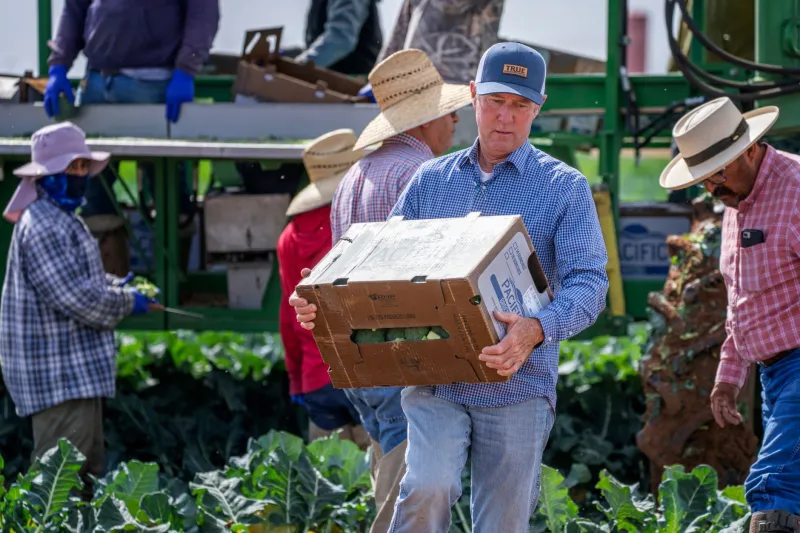
Customers want to know who will answer the email, pack the box, and wave from the cooler. Introduce the people by name and role. Not just the founders - the crew, the pickup host, the person who returns the phone call. Share a reason each one farms, but keep it human and specific. I grew up here and came back after college is fine. I wanted to raise my kids near the same creek is better. Include a photo of people, not just a tractor. The goal is recognition: when they pull into the pickup line, they should feel like they have already met someone.
3. A week in the life of the season
CSA customers are buying a relationship with weather. Tell them what a typical week looks like. Monday we harvest for Tuesday shares. Wednesday we pack the coolers. Thursday pickup runs from 4 to 7. A simple calendar story answers a dozen questions at once: when the season starts, how often they will hear from you, what happens when it rains, and how much planning the share requires. Be honest about the rhythm. If June is green onions and lettuce, say so. If August is a zucchini avalanche, say that too. Customers forgive a thin week. They do not forgive a surprise they were never warned about.
4. How the animals live
For beef, pork, poultry, and eggs, this is one of the most-read sections on the site. Do not just repeat labels. Explain the daily reality. Our cattle move to fresh pasture every few days. The hens are outside on grass during the day and in a mobile coop at night. We feed [specific feed] and work with [vet or processor]. Where are they processed? What happens if an animal gets sick? Customers are not looking for a perfect answer. They are looking for a straight one. Photos help, but plain language helps more. If you use a local processor, name the town. That is a trust signal and a local SEO signal at the same time.
5. What pickup day actually looks like
Describe the first ten minutes. Where do they park? Which door? Is there a sign? Do they bring bags? Is there a swap table? Are kids and dogs welcome? Is the pickup area accessible for a stroller or a wheelchair? If you run a town pickup site, describe that parking lot too. A short paragraph can remove the low-grade anxiety that keeps someone from signing up. Something like: Pull into the gravel drive and park along the fence. Come to the white cooler under the barn overhang. We will check your name, hand you your box, and you can swap any item on the table. If you are running late, text us - we will hold your share until 6:30. That is not marketing fluff. That is customer service written down.
6. What is in the box, and what is not
Show a real share, not a styled stock photo. List the sizes, the typical contents, and the storage reality. For a quarter beef, explain the cuts, the approximate freezer space, and what to do with the odd packages. For a CSA, explain the swap table, the newsletter, and the vacation hold policy. Then be honest about the gaps. A share is not a grocery store. Some weeks are heavy on greens. Some cuts go fast. If you explain that upfront, you attract the customers who will stay and gently filter out the ones who will be disappointed. Value is not just volume. It is knowing what you are getting.
7. The front door details and proof
End the page with the practical stuff and a clear next step. Address, hours, phone, email, a map, and a link to your Google Business Profile. Keep your name, address, and phone number consistent with what is on Google and your social profiles - that is basic local SEO, and it also prevents a customer from showing up at the wrong gate. Add proof: a few customer quotes, a review link, a tour date, a harvest photo from this month. Then give one obvious action: Join the CSA, reserve a quarter beef, or get on the waitlist. Do not make them hunt for the signup form after they have just decided they like you.
An About page is not the place to hide behind mission language. It is the first farm tour, the first pickup, and the first handshake. Tell the seven stories your customers are already asking for, and the next step gets a lot easier.